
Why does a deck go grey and slippery?
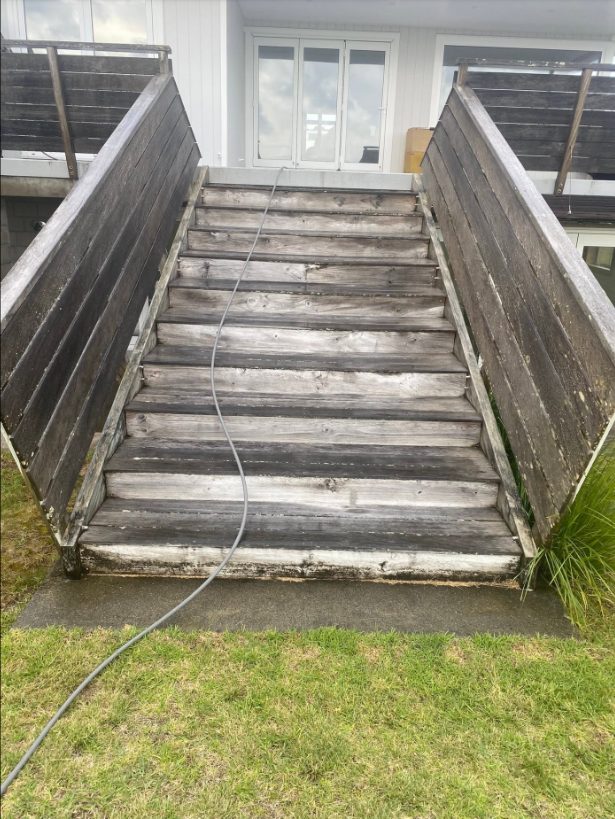
Sun, rain and salt break down the surface of the timber and it greys off. Mould, mildew and algae grow on top, especially in shady spots and over winter, and that's what makes it slippery. Grey, slimy decks and steps are a real slip hazard.
Why clean before you oil?
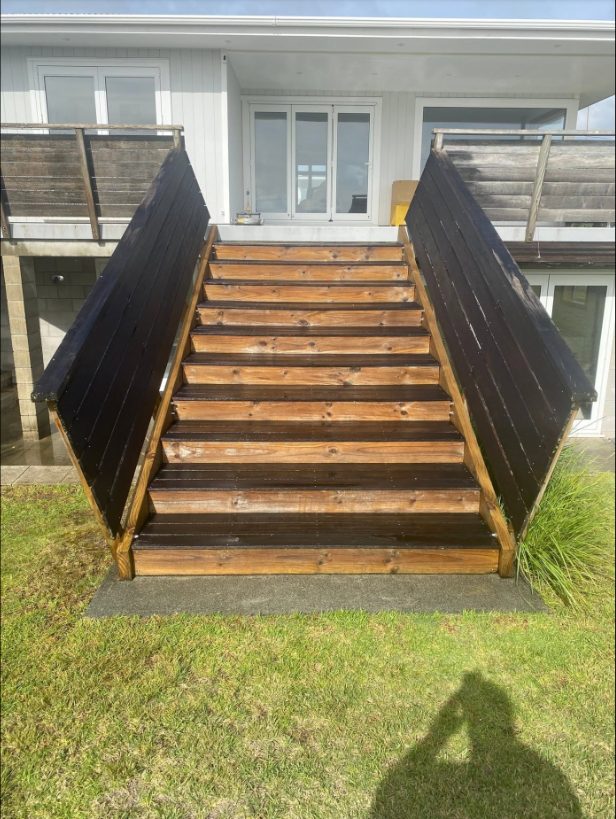
Oil and sealer soak into, or sit on, whatever is on the surface. Put them over mould and grey fibres and you seal the problem in, and the finish won't last. Our deck process uses pre and post-clean treatments to break down the grey build-up and mould, then lifts it off, taking the timber back close to how it looked the day it was laid. See deck and fence restoration for how it works.
What's the difference between oil and a sealer?
Decking oil soaks into the timber, brings out the colour and is easy to top up, but it needs redoing regularly, especially on decks that get full sun and salt. A sealer or stain gives a tougher layer that lasts longer between coats, but needs proper prep when it's time to redo it. Ask your supplier which product suits your timber, and follow the label.
How long after cleaning can I oil the deck?
Wait until the timber is properly dry. That usually means a few dry days after the clean, longer in cool or damp weather, and the product's instructions will say how dry it needs to be. Oil goes on badly over damp timber.
How do I keep it looking good?
Sweep off leaves so they don't sit and stain, give it a wash down through the year, and keep up the oil or sealer. If it greys off again, a clean before the next coat brings it back. Autumn is a good time, before winter makes it slippery.
What about steps and fences?
Steps and boardwalks get the same process as the deck. Fences get the same six-step process as a deck. Green driveways and paths are worth doing at the same time.
Bring your deck back to life
We cover Thames to Matarangi and everywhere in between, from our base in Tairua. Call or text Jono, or send us the details for a quote.