
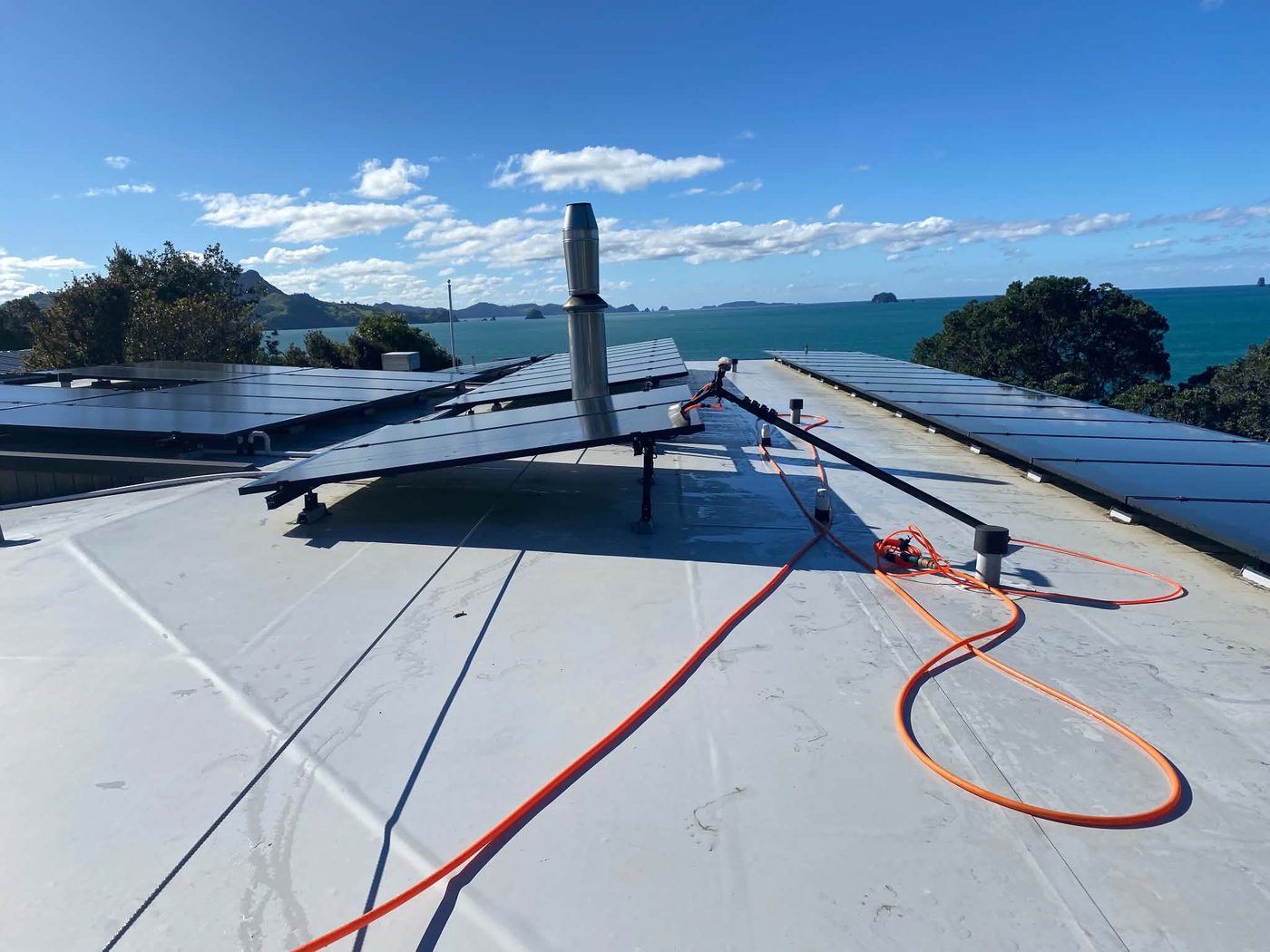
Why do panels get dirty on the coast?
Onshore wind carries salt spray that dries onto the glass as a fine film. Add dust, spring pollen and bird droppings, and the panels slowly lose light. Because they're up on the roof and out of sight, most people forget about them. But when panels lose efficiency you harness less power, which defeats the purpose of having them.
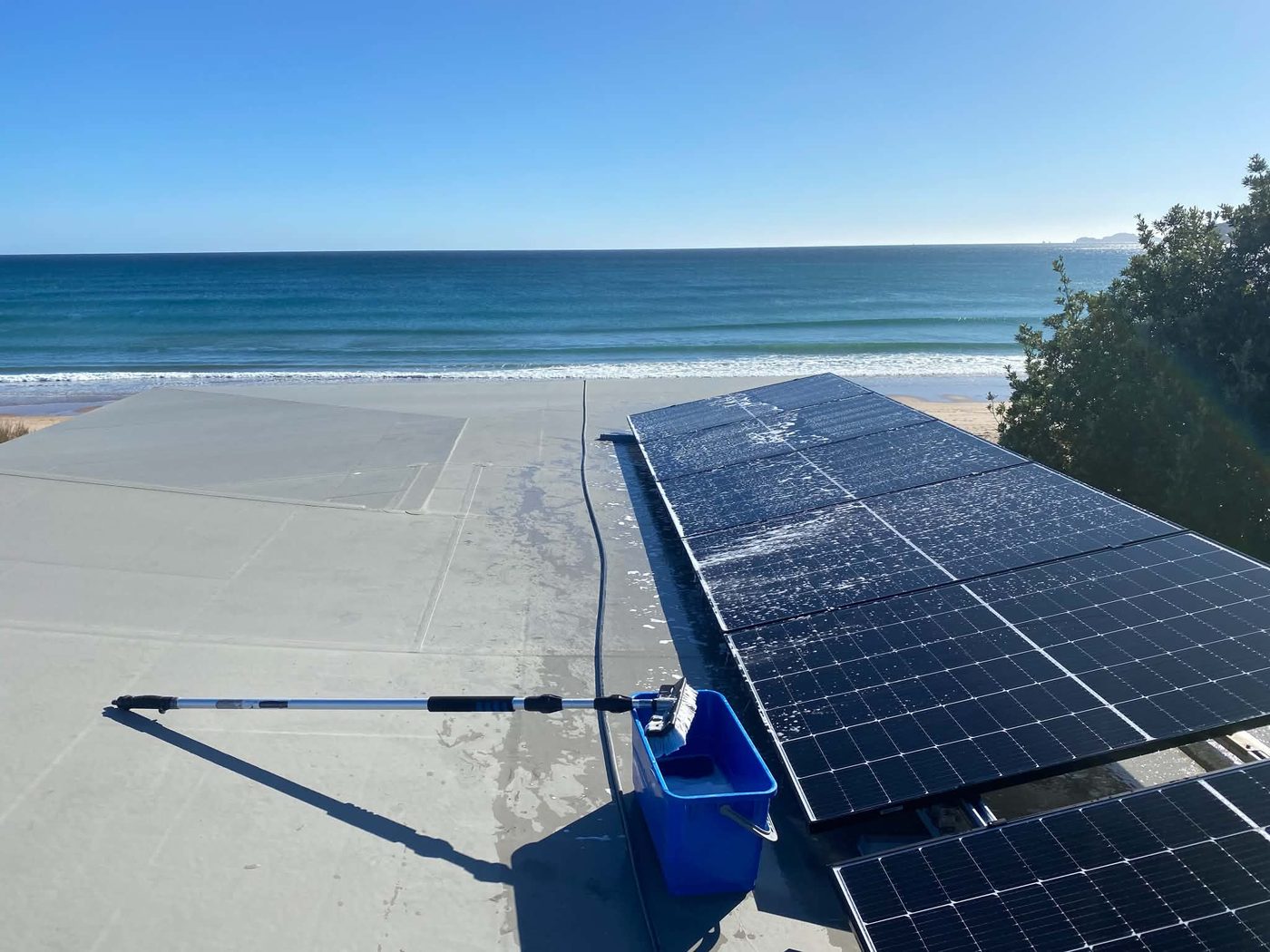
Doesn't the rain clean them?
Rain rinses off some loose dust, but the salt film, bird droppings and the grime that collects along the bottom edge of each panel usually stay put, especially on panels with a low tilt.
How do I know if my panels need cleaning?
Look at them from the ground or an upstairs window. A dull, hazy or spotty surface, or bird droppings, means they need a clean. If your inverter has an app, compare this month's output with the same month last year on a similar sunny day. A drop with no other explanation often means dirty panels.
How should solar panels be cleaned?
Gently. We use our de-ionised pure water unit, which lifts the salt and grime and dries without leaving mineral spots. Harsh detergents, abrasive brushes and high-pressure water can damage the glass or the seals, so check your panel maker's cleaning guidance. Tap water leaves its own mineral film behind as it dries.
Is it safe to clean them myself?
Getting onto the roof is the risky part. If you can't reach the panels safely from the ground, leave it to someone with the right gear and experience working at height.
When is the best time?
Before winter, when the sun is lower and every bit of output counts, and together with a roof clean and treatment so the roof, gutters and panels are all done in one visit. See solar panel cleaning.
Get your panels clean
We cover Thames to Matarangi and everywhere in between, from our base in Tairua. Call or text Jono, or send us the details for a quote.