
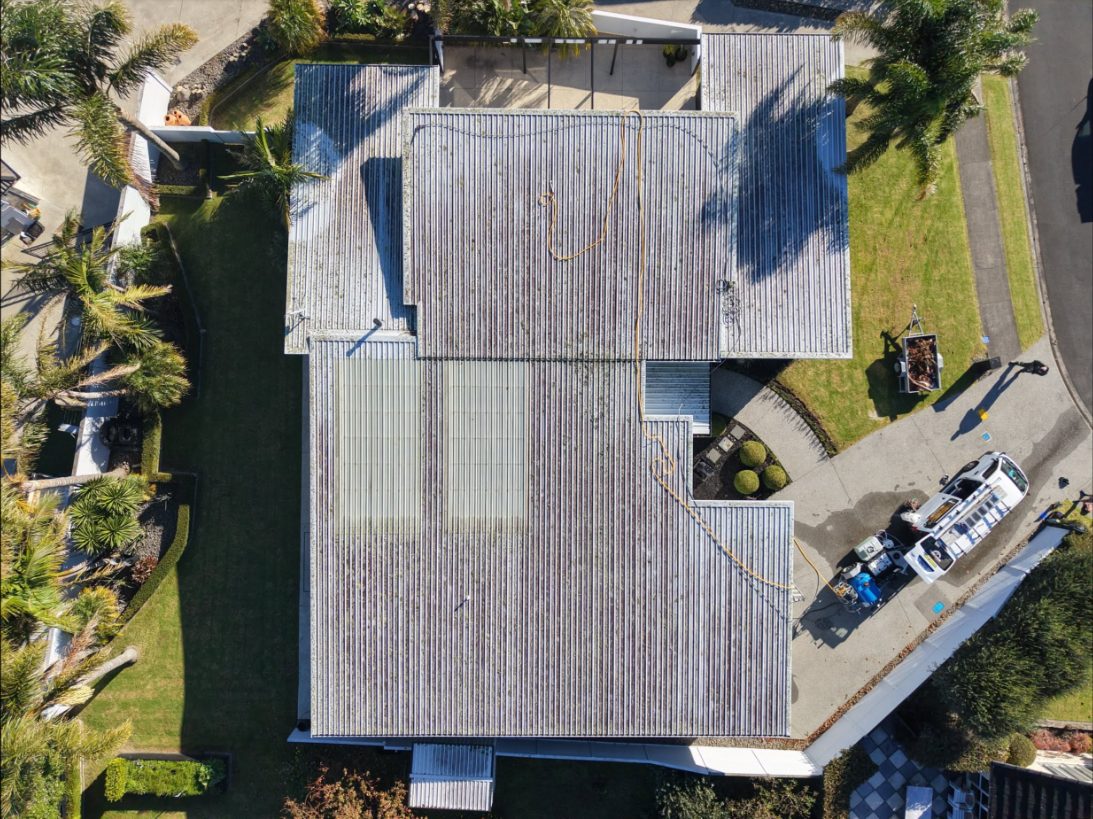
Why is moss bad for a roof?
Moss, mould and lichen hold moisture against the roof and slowly break down the surface. That leads to early deterioration, and eventually costly repairs or a replacement. The growth also washes into the gutters, where it builds up and blocks them, and blocked gutters can force water back into the roof cavity and the house.
If you're on tank water there's another reason: whatever grows on the roof ends up in the tank. If you drink from the tank, it needs to be disconnected while the roof is cleaned, and for approximately six weeks after a post-clean treatment, so the chemical can't get in.
What's the difference between moss, mould and lichen?
Moss is the green, spongy growth that soaks up water. Mould and algae show up as black or green staining. Lichen is the crusty grey, white or orange growth that grips the surface tightly and is the hardest to shift. Most Coromandel roofs have a bit of all three, especially on the shady side.
Can I just waterblast it off?
We wouldn't. High pressure can strip the coating off iron and damage tiles, and it doesn't deal with what's left in the surface, so the growth comes back quickly. A proper clean followed by a treatment that keeps working is gentler on the roof and lasts longer. Working at height is also the riskiest part of the job, which is why we only go up where there's safe access. More on the difference in soft washing vs waterblasting.
How does a roof wash and treatment work?
- CleanThe moss, mould and lichen are cleaned off, where there's safe access to the roof.
- ClearThe gutters are cleared so the debris doesn't go straight back into them.
- TreatA post-clean treatment goes on and keeps working on regrowth after we've finished.
- Show youBefore and after drone photos, so you can see the whole roof for yourself.
See roof wash and treatment for what's included.
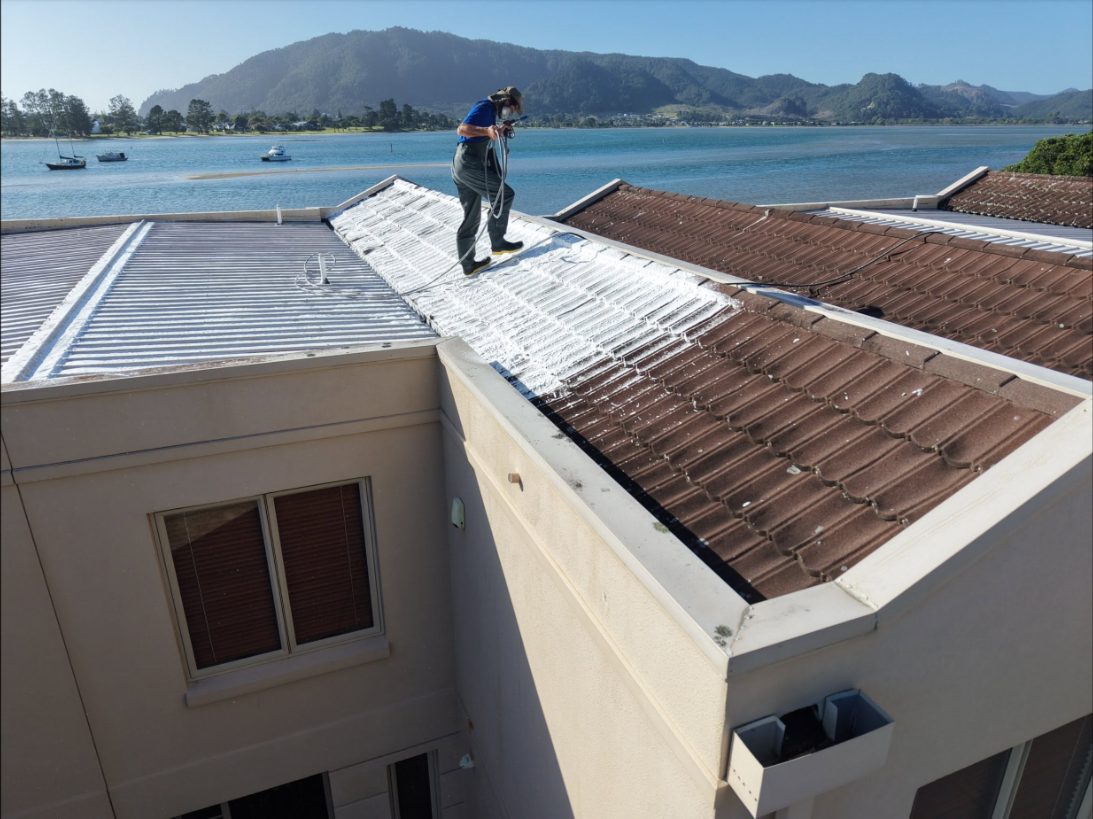
When is the best time to treat a roof?
Autumn through to spring, because the roof needs to be cool for the job to be done efficiently. In summer the rinse water and the chemical evaporate as soon as they go on. We can work through winter, and a little rain actually helps, but not torrential rain, because it isn't safe up there. It's also worth doing before you sell, before the house is painted, and before summer if the place is a holiday rental.
How long does the treatment last?
The post-clean treatment keeps working on moss, mould and lichen long after we've left, protecting the roof for around the next 12 months. Roofs under trees or on the shady side of a hill may need it more often.
What will I see afterwards?
A full roof wash gives you same-day results: it looks brand new when we leave. A treatment on its own looks exactly the same as when we arrived, because it takes several months for the sun, wind and rain to break down the organic matter and wash it away.
What about the solar panels?
While the roof is being done is the easiest time to clean the panels too. Read why in do dirty solar panels lose power?
“Having the before and after drone photos made a huge difference and gives you a lot of confidence that the jobs been done properly.”
Get your roof sorted
We cover Thames to Matarangi and everywhere in between, from our base in Tairua. Call or text Jono, or send us the details for a quote.